


Without a programmed transponder key, you won’t be able to start your car. Car key programming is an essential procedure that your key fob needs to go through in order for it to operate and start the vehicle.
Key replacement procedure has to be done the right way. Failing to do so might result in a compromised security, broken module, disabled vehicle, and very expensive repairs.
If you decided to contact a car key programming service provider, make sure you’re working with a reputable company. A reputable company will have insurance to cover any damage done to your car.
A general recommendation would be to contact a professional auto locksmith shop, a professional would have the right skills and tools to program any vehicle key, from the newest smart key to the oldest remote key, in a safe way without encountering any car key programming issue.
How do you program a new car key?
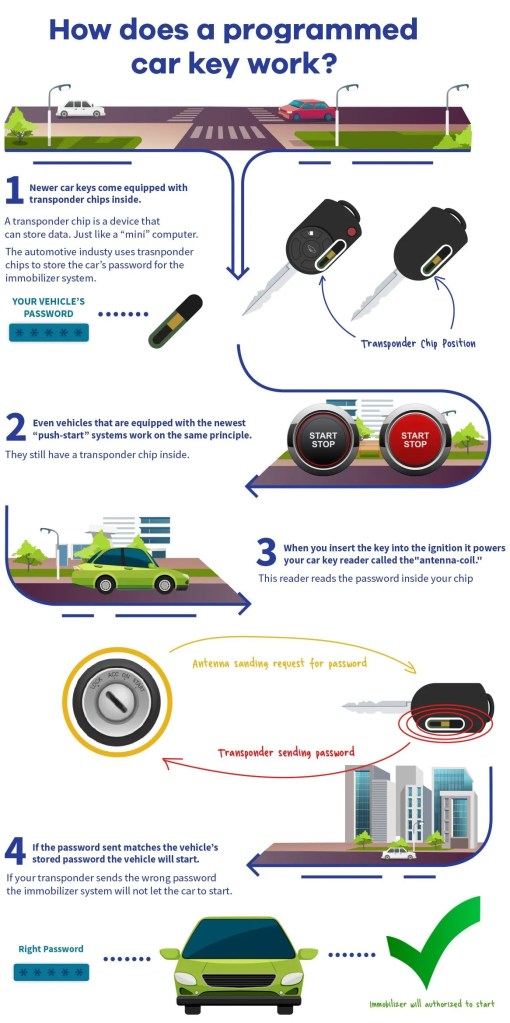
Now, when we understand the basic process behind our programmed car keys, let’s discuss how we can program a new car key. Essentially car key programming is the process of “marrying” between a new car key and your vehicle. Our anticipated end result is matching the correct password for our new car key or fob.
Usually, the process is universal for any vehicle. First, we would have to communicate with our car to retrieve the correct password. This communication can be done on many levels, from the most basic, which is following a specific Onboard procedure (which we will cover later on), to a more advanced level of communication such as OBD2 or a more fundamental process which is called EEPROM or MCU programming.
Next, after having the correct “data” or “password,” we can write it to our new transponder key. Now let’s discuss all the methods for car key programming.
All the methods for car key programming
1. Onboard Programming
Some car brands allow for easy key programming, like GM, for example. If you have a spare working key for your general motors vehicle, it is relatively easy to program a new one. The procedure should take no more than 1 minute to program new chip keys.
This type of procedure is called onboard programming because it does not require sophisticated programmers to program a new key fob. Any car owner can do all the programming procedures “onboard” inside the vehicle with the help of his existing key.
The programming usually involves a series of simple steps that the user has to do that eventually puts the vehicle into “learn mode” or “programming mode,” allowing the car to program the additional key fob or a spare key.
If your car is equipped with onboard programming, you will be able to find those instructions in your car manual or on the internet by typing “onboard programming steps for X vehicle.” Another great resource would be a website called “Program your remote” it has an excellent database for onboard programming.
2. OBD2 programming
Other car brands do not offer the option to program your car keys quickly and easily. If your vehicle is one of them, you most likely need a highly-advanced car key programmer to be able to do the job. Typically newer vehicles will require those.
In many cases, such car key programmers are very expensive and require knowledge to operate them. Some advanced programmers, typically called “dealer tools” or “dealer programmers,” are not even accessible to the general public. They require a special commercial license and an online subscription.
An auto locksmith will have the necessary tools and will be able to assist you with your programming requirements. It is recommended that you research the automotive locksmith company you are about to give business to ensure credibility before providing them any access to your vehicle. Choosing the wrong person for the job can easily compromise your vehicle’s security.
This type of programming is called OBD2 programming. It allows the specialist to enter the programming mode by one of the OBD2 protocols and modify the data to program a key fob to the car, and everything will be done through the OBD.
3. “On-bench” programming or EEPROM programming
EEPROM programming is the most fundamental and complex type of car key programming because it is pure electronics. This method is used only when there is no option to bypass the anti-theft system and enter the programming mode via the OBD2 port. Requires an in-depth understanding of circuit boards, electronics, and soldering.
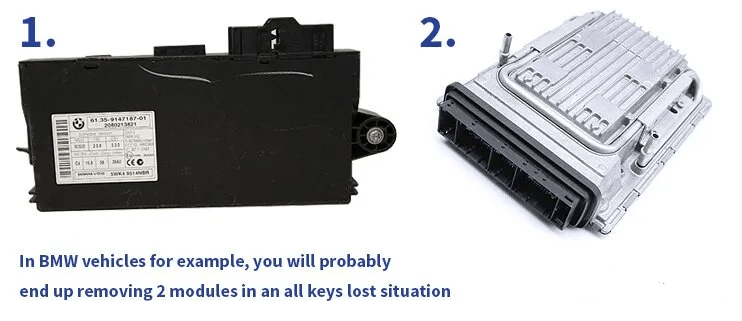
EEPROM method requires extracting specific modules out of your car (security components); it is done to read the correct “password” and the “stored key data” located inside of the microchip which is sitting on the circuit board. It will allow us to enter the “programming mode” later and program a new automotive key to the car.
Such methods are risky and have a high chance of corrupting the information on the module. This is why you should contact a car key expert; he will have comprehensive knowledge of the security system, allowing him to reduce the risk of corrupting the data. You can find a great Youtube video explaining the EEPROM process for BMW key programming in this link.
In Conclusion
If your car is equipped with onboard programming and have an older Toyota with master key in your hand you will be able to program a new transponder key or remote by yourself. If you own a newer vehicle, most likely it would not be equipped with onboard programming, and it will require a professional key programmer.
For an average car owner to program a new key fob, he would have to invest a considerable amount of money on key programmers and spend a lot of time studying vehicle programming; in this case, the best recommendation would be to go to a professional car locksmith shop like |BeeKeys|, we would be able to program any type of transponder keys in many cases with ease.
 beekeys.co.uk